

Dr. Beniam Betsiha, Ph.D., MA, MRC, NCC, LPC, LCDC, CRC
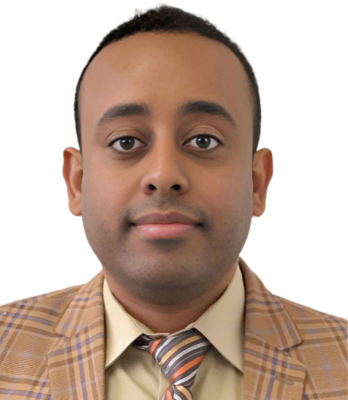
Adjunct Professor
| Curriculum Vitæ Health Sciences 102 West Ave. E C-58 432 837-8656 bbetsiha@sulross.edu |
Dr. Beniam Aster Megabi Awoke Betsiha built his career on a simple premise: the people furthest from care often need it most, and the systems meant to serve them rarely speak their language, literally or otherwise. Born in Ethiopia and raised as a refugee in Kenya before settling in Texas, he now works at the intersection of trauma counseling, rehabilitation counseling, and refugee and immigrant education policy, bringing lived experience into every classroom and clinical setting he enters.
Dr. Beniam holds a Ph.D. in Counselor Education and Supervision (CACREP-accredited), a master's in Clinical Mental Health Counseling (CACREP-accredited), a master's in Clinical Rehabilitation Counseling (CACREP-accredited), and a bachelor's in Psychology. He is a Licensed Professional Counselor (LPC), Licensed Chemical Dependency Counselor (LCDC), Certified Rehabilitation Counselor (CRC), and National Certified Counselor (NCC). He received the 2025 Saybrook Standout Award in recognition of his excellence across scholarship, research, teaching, and counseling in Counselor Education and Supervision. His dissertation examined counselor trainees' self-efficacy with suicide-risk clients. He is currently an Ed.M. candidate in International Education Policy and Management at the Harvard Graduate School of Education (HGSE), Class of May 2027, where he serves as Vice President of Internal and Campus Affairs for the Harvard Black Graduate Student Alliance, liaising across Harvard's twelve graduate and professional schools.
His scholarship spans a co-authored book chapter in press with Cognella Academic Publishing and a published chapter, "Strengthening teacher AI literacy in Mexico," in a Harvard Graduate School of Education volume edited by Professor Fernando Reimers. He has presented at Harvard on institutional legitimacy under crisis conditions and on closing the learning poverty gap in Ethiopia, delivered an invited guest lecture at New York University (NYU) on the legal and cultural implications of digital exclusion, and contributed to the UNETE collaborative presentation on technology and teacher capacity in low-resource contexts at the HGSE Global Education Policy Conference.
His clinical work has followed populations the system most often overlooks: incarcerated adolescents at the Denton County Juvenile Detention Center, where he designed an original resilience curriculum focused on coping and emotional regulation; chronically homeless adults and foster youth aging out of care at CitySquare-TRAC, where he coordinated services across housing, behavioral health, employment, and legal systems; and clients in inpatient substance use treatment and intensive outpatient counseling. He has also stood in the room for children who otherwise had no advocate, meeting directly with principals, senior district officials, and superintendents to represent students from refugee and immigrant families facing expulsion, with a consistent record of getting them reinstated.
Dr. Beniam is currently an Assistant Professor in Counseling Programs at the University of West Alabama (UWA) and an Adjunct Professor at Sul Ross State University (SRSU). From 2020 to 2023, he co-instructed CACREP-accredited graduate- and doctoral-level courses at Saybrook University and Capella University, including instructional theory and practice, introduction to clinical mental health counseling, basic counseling skills, theory and treatment of trauma, crisis and trauma intervention, psychopathology and psychopharmacology, cultural humility and responsiveness, professional orientation and ethical practice, and counseling practicum and internship. Throughout, he provided individual clinical supervision and contributed to CACREP-aligned curriculum development. Earlier, as a Graduate Assistant in UTEP's Clinical Rehabilitation Counseling program, he conducted federal policy analysis and compliance review under the Rehabilitation Services Administration's Rehabilitation Long-Term Training grant, working directly with the program's project director and officials from the U.S. Department of Education.
Dr. Beniam is also co-founder and managing partner of Safe Space Connect, PLLC, a sliding-scale practice delivering trauma-focused counseling in English and Amharic to marginalized, immigrant, and refugee communities across North Texas. For Dr. Beniam, this work has never been theoretical. It happens in the room, with the people the system was never built for.