

2026 SRSU Student Symposium – Virtual Presentation Schedule
Thursday, April 9th, 2026
Click on a Session Time (left row of the schedule below) to jump down the page and view the Presentation Abstracts, Presenter Videos, & Session Recordings for that Session Time.
|
SRSU Virtual Symposium Spotlight Event: Welcome and Keynote Introduction – Dr. Bonnie Warnock |
||||
| Session Time |
Virtual Room A | Virtual Room B | ||
| 1:00-1:20 |
Presenter: Francisco Olivares |
Presenter: Tamara Smart Moderator: Dr. Jeanne Qvarnstrom (Education) Title: “Navigating the Nexus: Leadership Styles and Management Efficacy in Educational Administration in Rural Texas Public Schools“ (start: 1pm) CLICK HERE TO ATTEND SESSION Virtual Room B Session Feedback Form |
||
| Presenter: Luis Duran Moderator: Dr. Jeanne Qvarnstrom (Education) Title: “Leading with Kindness: Proactive and Restorative Classroom Management in an 11th Grade History Classroom“ (start: 1:30pm) CLICK HERE TO ATTEND SESSION Virtual Room A Session Feedback Form |
No Room B – 1:30pm Session Scheduled | |||
| 2:00-2:20 | Presenter: Rosemary Ketring Moderator: Dr. Xinyuan Qiu (Humanities & Sciences) Title: “Remote Monitoring for Livestock Production on Absentee Lands“ (start: 2pm) CLICK HERE TO ATTEND SESSION Virtual Room A Session Feedback Form |
No Room B – 2:00pm Session Scheduled |
||
| 2:30-2:50 | Presenter: Paloma Jimenez Moderator: Dr. Xinyuan Qiu (Humanities & Sciences) Title: “Capital Punishment“ (start: 2:30pm) CLICK HERE TO ATTEND SESSION Virtual Room A Session Feedback Form |
No Room B – 2:30pm Session Scheduled |
||
| 3:00-3:20 |
Presenter: Gannon Moore Moderator: Dr. Jessica Velasco (Political Science) Title: “Policy Diffusion and NIL Reform: Why a Federal Framework Could Level the Playing Field“ (start: 3pm) CLICK HERE TO ATTEND SESSION Virtual Room A Session Feedback Form |
No Room B 3:00pm Session Scheduled |
||
| 3:30-3:50 | Presenter: Raquel Contreras Moderator: Dr. Jessica Velasco (Political Science) Title: “Texas Water Policy and the Impending Shortfall“ (start: 3:30pm) CLICK HERE TO ATTEND SESSION Virtual Room A Session Feedback Form |
Presenter: Manuel Flores Moderator: Dr. Doug Renshaw (Kinesiology) Title: “Recovery Modality Effects on Neuromuscular and Perceptual Outcomes in Collegiate Basketball Athletes“ (start: 3:30pm) CLICK HERE TO ATTEND SESSION Virtual Room B Session Feedback Form |
||
| 4:00-4:20 | Presenter: Aron Olague Moderator: Dr. Alicia Trotman (Psychology) Title: “Smarter Supply Chains: How Artificial Intelligence Is Transforming Global Logistics“ (start: 4pm) CLICK HERE TO ATTEND SESSION Virtual Room A Session Feedback Form |
No Room B – 4:00pm Session Scheduled | ||
| 4:30-4:50 | Presenter: Eliana Mata Moderator: Dr. Alicia Trotman (Psychology) Title: “’I’m Only Human: Understanding Mental Health Literacy, Stigma, and Help-Seeking Behaviors Among Female Collegiate Athletes“ (start: 4:30pm) CLICK HERE TO ATTEND SESSION Virtual Room A Session Feedback Form |
No Room B – 4:30pm Session Scheduled |
||
Noon – 12:50pm Symposium Spotlight Event – Welcome and Virtual Symposium Keynote Address
Noon-12:50pm / SRSU Virtual Symposium Spotlight Event
Welcome & Keynote Introduction – Dr. Bonnie Warnock
Dean of the College of Ag, Life & Physical Sciences (ALPS)
Keynote Speaker – Dr. Masahiro “Masa” Ohnishi
Masa is a distinguished alumnus earning his B.S. and M.S. degrees from Sul Ross State University and currently works as a wildlife scientist at the Wildlife Management Office Inc. in Japan.
CLICK HERE TO VIEW VIRTUAL KEYNOTE ADDRESS RECORDING
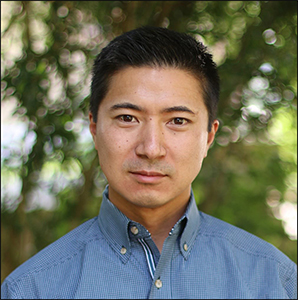
Keynote Bio:
I am a wildlife scientist at Wildlife Management Office Inc. in Japan. My work focuses on wildlife population management, mitigation of human–wildlife conflicts, and the development of effective wildlife management systems and policies for large mammals, particularly sika deer and Asiatic black bears.
I studied wildlife management in the United States, earning my B.S. and M.S. degrees from Sul Ross State University and my doctoral degree from Texas A&M University–Kingsville. Through my academic training and field experience in North America, I developed expertise in applied wildlife management, including population control, habitat management, and the role of hunting in sustainable wildlife conservation.
In Japan, I work on research, policy support, and field-based wildlife management projects addressing issues such as deer overpopulation, bear management, broader human–wildlife conflict, and the development of multi-prefecture management policies. My work bridges international wildlife management practices and Japanese conservation policy, contributing to the advancement of science-based wildlife management in Japan.
.
1:00 – 1:20pm Session Presentations – Student Information and Abstracts
1:00-1:20pm / Virtual Room A – Moderator: Dr. James Cho
Presenter: Francisco Olivares
Moderator: Dr. James Cho (Business Administration)
Title: “Lessons from the East: Applying Taiwanese Manufacturing Success to the U.S. Industrial Rebirth“
Virtual Presentation: Pre-recorded video presentation with live follow-up – Graduate -SRSU Eagle Pass / Business Administration
Abstract: This project examines strategic frameworks for revitalizing domestic manufacturing capabilities within the United States. Driven by the current administration’s focus on industrial reconstruction, this research analyzes successful manufacturing models in Taiwan to identify scalable strategies for the U.S. market. By investigating specific case studies of Taiwanese industrial efficiency and innovation, we aim to provide a comparative perspective that addresses modern supply chain issues and infrastructure development. The goal of this ongoing study is to offer actionable insights into how the U.S. can effectively “bring back” and sustain its manufacturing edge in a competitive global landscape.
| PRESENTER VIDEO | SESSION RECORDING |
1:00-1:20pm / Virtual Room B – Moderator: Dr. Jeanne Qvarnstrom
Presenter: Tamara Smart
Moderator: Dr. Jeanne Qvarnstrom (Education)
Title: “Navigating the Nexus: Leadership Styles and Management Efficacy in Educational Administration in Rural Texas Public Schools“
Presentation: Pre-recorded video presentation with live follow-up – Graduate – SRSU Alpine / Education
Abstract: In 2021, after the NCAA v. Alston Supreme Court decision, states and universities were left to figure out how best to manage Name, Image, and Likeness (NIL). Those who pay attention to the world of collegiate athletics have been nervous and curious about how these changes will impact collegiate athletics. Studies are just starting to come out, although assessing the impact of NIL policies is difficult due to the patchwork of policies and laws across the country. One largely unknown component of the NIL space is the collective. This study seeks to shed some light on collectives, their history, their role, and the relationship of these collectives to other variables and changes in the collegiate athletics space.
To make the study scope manageable, the focus will be on BIg 12 schools, which contain both public and private institutions from several states, including those with and without NIL laws. This will allow for a comparison of the relationship of the collectives to a number of school and state variables.
| PRESENTER VIDEO | SESSION RECORDING |
1:30 – 1:50pm Session Presentations – Student Information and Abstracts
1:30-1:50pm / Virtual Room A – Moderator: Dr. Jeanne Qvarnstrom (Education)
Presenter: Luis Duran
Moderator: Dr. Jeanne Qvarnstrom (Education)
Title: “Leading with Kindness: Proactive and Restorative Classroom Management in an 11th Grade History Classroom“
Poster/Presentation: Pre-recorded video presentation with live follow-up – Undergraduate – SRSU Eagle Pass / Education
Abstract: This presentation examines proactive and restorative classroom management practices observed in a secondary U.S. History classroom. The study draws on multiple structured classroom observations conducted over 15 hours in an 11th-grade U.S. History class at Eagle Pass High School. Using a structured observation instrument from EDSR 4322, the researcher documented instructional routines, teacher–student interactions, behavioral expectations, and responses to student behavior.
Findings highlight the effectiveness of clear, consistent procedures, intentional relationship-building, student choice, and restorative conflict resolution. The observed teacher consistently promoted student engagement and accountability through routines such as retrieval practice, collaborative activities, structured movement, and reflective questioning. Rather than relying on punitive discipline, the teacher emphasized calm redirection, private conversations, and guided reflection to address behavioral concerns. Relationship-building strategies — including regular communication, personal student check-ins, and parent contact — further supported a positive classroom climate.
Overall, the observations demonstrate that proactive and restorative management strategies support student engagement, emotional regulation, and a respectful learning environment. This presentation links classroom practice to course concepts in classroom management and social-emotional learning, offering practical insights for future educators seeking to create structured, supportive, and responsive secondary classrooms.
| PRESENTER VIDEO | SESSION RECORDING |
1:30-1:50pm / Virtual Room B – Moderator:
2:00 – 2:20pm Session Presentations – Student Information and Abstracts
2:00-2:20pm / Virtual Room A – Moderator: Dr. Xinyuan Qiu
Presenter: Rosemary Ketring
Moderator: Dr. Xinyuan Qiu (Humanities & Sciences)
Title: “Remote Monitoring for Livestock Production on Absentee Lands“
Poster/Presentation: Pre-recorded video presentation with live follow-up – Graduate – SRSU Alpine / Range and Wildlife Management
Abstract: Texas rangelands have few alternative agricultural uses and make up over half of the state’s land area. This land is most commonly grazed by cattle as well as ungulates managed for hunting. These land uses work well for absentee landowners, who now make up thirty percent of ownership in the state. Sheep and goat production can be integrated into these operations, generating additional income and supporting land conservation practices. Sheep and goats are beneficial grazers on rangelands containing woody plants and forbs that cattle overlook. Texas remains the nation’s top sheep and goat producer, and markets for these animals are well established throughout the state. Frequent challenges to sheep and goat production include predation, fencing, and gathering animals for working days. Remote monitoring technologies can help bridge the disconnect with the land that is common among non-resident landowners. A smart technology response to common sheep and goat production challenges has been implemented and is summarized here. Solutions include predator deterrence, real-time livestock location tracking, cameras, feeders, and water infrastructure, researched and applied across three extensive rangeland locations managed by AgriLife Research. This summary of technology applications across working ranches provides insight into operational problems and potential solutions, product selection and support, maintenance, data collection and review, and the likelihood of continued use. In addition, findings point to future needs and potential new solutions. This work supports growth in the Texas sheep and goat industry and builds confidence in the remote monitoring of managed lands.
| PRESENTER VIDEO | SESSION RECORDING |
2:00-2:20pm / Virtual Room B – Moderator:
No Room B 2:00pm Session Scheduled Currently
2:30 – 2:50pm Session Presentations – Student Information and Abstracts
2:30-2:50pm / Virtual Room A – Moderator: Dr. Xinyuan Qiu
Presenter: Paloma Jimenez
Moderator: Dr. Xinyuan Qiu (Humanities & Sciences)
Title: “Capital Punishment“
Poster/Presentation: Pre-recorded video presentation with live follow-up – Graduate – SRSU Alpine, Eagle Pass / Criminal Justice
Abstract: In my presentation, capital punishment will be discussed. Explaining what capital punishment is, what other terms it is called, and further research over the topic. Such as what states are currently doing capital punishment legally, what procedures are done to offenders who are in the death row, and the exceptions of capital punishment as well. What rights would be violated if given capital punishment inappropriately will be discussed and statistical findings about capital punishment in Texas and the United States. Lastly, compare Texas capital punishment from other states in the United States.
| PRESENTER VIDEO | SESSION RECORDING |
2:30-2:50pm / Virtual Room B – Moderator:
No Room B 2:30pm Session Scheduled Currently
3:00 – 3:20pm Session Presentations – Student Information and Abstracts
3:00-3:50pm / Virtual Room A – Moderator: Dr. Jessica Velasco
Presenter: Gannon Moore
Moderator: Dr. Jessica Velasco (Political Science)
Title: “Policy Diffusion and NIL Reform: Why a Federal Framework Could Level the Playing Field“
Poster/Presentation: Pre-recorded video presentation with live follow-up – Undergraduate – SRSU Alpine / Political Science
Abstract: Name, Image, and Likeness (NIL) rights have transformed college athletics by allowing student-athletes to earn money from their personal brands. While this has created new opportunities, it has also generated confusion due to the absence of a federal policy guiding institutions. Instead, states have enacted their own NIL laws, producing uneven standards and competitive disparities. This policy brief examines how NIL policies have spread across states and what this means for fairness and compliance in college sports. The focus is on Texas House Bill 126, which permits universities to pay athletes directly and requires contract transparency, comparing it to laws in California and New Mexico. The brief applies Policy Diffusion Theory to explain why states moved quickly after the NCAA permitted NIL compensation. Three policy options are considered: continuing state-based approaches, establishing a federal NIL framework, and increasing regulation of NIL agents and collectives. After weighing benefits and drawbacks, the brief argues that a federal NIL framework would provide the most consistent and equitable system for athletes and universities alike. This approach would establish clear rules nationwide, reduce compliance burdens, and include protections for student-athletes. The brief also identifies core criteria for evaluating this solution, including fairness and administrative simplicity. By examining these options, the research explains why federal action may be necessary to address the challenges posed by NIL and maintain competitive balance in college athletics.
| PRESENTER VIDEO | SESSION RECORDING |
3:00-3:20pm / Virtual Room B – Moderator: Dr. Jessica Velasco
3:30 – 3:50pm Session Presentations – Student Information and Abstracts
3:30-3:50pm / Virtual Room A – Moderator: Dr. Jessica Velasco
Presenter: Raquel Contreras
Moderator: Dr. Jessica Velasco (Political Science)
Title: “Texas Water Policy and the Impending Shortfall“
Poster/Presentation: Pre-recorded video presentation with live follow-up – Undergraduate – SRSU Alpine / Political Science, McNair
Abstract: Texas is confronting an intensifying water crisis shaped by prolonged drought, rapid population growth, and the deterioration of critical water infrastructure. Projections from the Texas Water Development Board estimate an annual water deficit of approximately 5.74 million acre-feet by 2050, with even more severe shortages anticipated by 2070 if current patterns continue. This study evaluates Texas water conservation policy through an institutionalist analytical framework, emphasizing how state and local institutions influence policy design, implementation, and long-term resource governance. Although Texas has enacted foundational measures — most notably the Water Planning Act of 1957 and the establishment of the Texas Water Development Board — significant gaps persist in research capacity and coordinated planning. Recent legislative actions, including Proposition 4 and the creation of the Texas Water Fund, represent meaningful progress but rely heavily on surplus revenue, raising concerns about the durability and predictability of future funding. Additionally, allocated funds will be directed primarily toward developing new water supplies and repairing failing infrastructure. Texas also lacks a comprehensive strategy to address emerging pressures such as produced water management and reuse, the escalating water demands of data center development, and the implications of overtourism. These challenges underscore the need for a more integrated and forward-looking policy framework capable of addressing both traditional water supply concerns and evolving industrial demands. By examining institutional constraints and identifying opportunities for reform, this research contributes to ongoing policy discussions surrounding sustainable water management and highlights the urgency of developing resilient, equitable, and science-informed approaches to safeguarding Texas communities against worsening water scarcity.
| PRESENTER VIDEO | SESSION RECORDING |
3:30-3:50pm / Virtual Room B – Moderator: Dr. Doug Renshaw
Presenter: Manuel Flores
Moderator: Dr. Doug Renshaw (Kinesiology)
Title: “Recovery Modality Effects on Neuromuscular and Perceptual Outcomes in Collegiate Basketball Athletes“
Poster/Presentation: Pre-recorded video presentation with live follow-up – Undergraduate – SRSU Alpine / Kinesiology, McNair Scholar
Abstract: INTRODUCTION AND PURPOSE: Optimizing post-practice recovery is essential for maintaining performance in collegiate basketball athletes. Cold-water immersion (CWI) and intermittent pneumatic compression (COMP) are widely used; however, their comparative effects on neuromuscular and perceptual outcomes remain unclear. This study evaluated the effects of CWI versus COMP on markers of neuromuscular performance, physiological response, and perceptual recovery following basketball practice.
METHODS: Using a repeated-measures design, NCAA Division II male basketball athletes (n = 6) completed both recovery conditions (CWI and COMP). Testing occurred immediately post-practice and 24 h post-intervention. Measures included perceived recovery status, delayed onset muscle soreness (DOMS), heart rate, countermovement jump (CMJ) height, CMJ peak power, and CMJ fatigue index derived from repeated maximal CMJs. Immediate post-practice rating of perceived exertion (RPE) was also assessed. Data were analyzed using a two-way repeated-measures ANOVA (condition × time), with effect sizes reported as partial eta squared (ηp²).
RESULTS: CWI resulted in a significantly lower CMJ fatigue index compared to COMP, F(1, 5) = 29.27, p = .003, ηp² = .85, whereas immediate RPE was significantly higher following CWI, F(1, 5) = 33.76, p = .002, ηp² = .87. No significant effects were observed for perceived recovery status, DOMS, heart rate, CMJ height, or CMJ peak power.
CONCLUSION: CWI improved neuromuscular recovery but increased perceptual strain, indicating a physiological–perceptual trade-off. COMP showed no meaningful effects. These findings support cautious implementation of CWI in applied basketball settings.
| PRESENTER VIDEO | SESSION RECORDING |
4:00 – 4:20pm Session Presentations – Student Information and Abstracts
4:00-4:50pm / Virtual Room A – Moderator: Dr. Alicia Trotman
Presenter: Aron Olague
Moderator: Dr. Alicia Trotman (Psychology)
Title: “Smarter Supply Chains: How Artificial Intelligence Is Transforming Global Logistics“
Poster/Presentation: Pre-recorded video presentation with live follow-up – Graduate – SRSU Alpine / Business Technology & Artificial Intelligence
Abstract: Artificial intelligence (AI) is changing the way supply chains operate around the world. In this presentation, Smarter Supply Chains: How Artificial Intelligence Is Transforming Global Logistics, I explain how AI is helping companies make better decisions, move products faster, and reduce errors. As supply chains become more complex and customers expect quicker deliveries, businesses are turning to AI to stay competitive and improve overall performance.
AI is used in many areas of logistics. Predictive analytics, for example, helps companies forecast demand more accurately so they do not overstock or run out of products. Machine learning can identify the fastest and most cost-effective delivery routes, saving both time and fuel. In warehouses, robotics and automated systems improve picking, packing, and inventory tracking. Companies such as Amazon and DHL already use AI to accelerate operations and handle large volumes of orders more efficiently.
AI also helps businesses prepare for disruptions by analyzing real-time data and identifying potential delays before they become major problems. Challenges remain, however, including high setup costs, data security concerns, and the need to train employees to work with new technology.
Overall, AI is not just about automation — it is about building smarter, more reliable supply chains that can adapt to change. By using AI effectively, companies can improve efficiency, lower costs, and better meet customer demands in today’s global market.
| PRESENTER VIDEO | SESSION RECORDING |
4:00-4:20pm / Virtual Room B – Moderator:
4:30 – 4:50pm Session Presentations – Student Information and Abstracts
4:30-4:50pm / Virtual Room A – Moderator: Dr. Alicia Trotman
Presenter: Eliana Mata
Moderator: Dr. Alicia Trotman (Psychology)
Title: “’I’m Only Human: Understanding Mental Health Literacy, Stigma, and Help-Seeking Behaviors Among Female Collegiate Athletes“
Poster/Presentation: Pre-recorded video presentation with live follow-up – Undergraduate – SRSU Alpine / Psychology
Abstract: Collegiate athletes experienced a unique set of challenges that extended beyond physical performance into psychological well-being. The demanding nature of balancing academics, athletics, and personal life created an environment in which stress and emotional strain were highly prevalent. Research by Hilliard, Watson, and Zizzi (2022) suggested that these pressures increased the need for mental health services among student-athletes. However, despite this growing need, many athletes did not seek professional help.
One of the most significant barriers identified in previous research was stigma. Public stigma refers to societal perceptions that seeking mental health services is undesirable, while self-stigma occurs when individuals internalize these beliefs and view themselves negatively for needing help. These stigmas often discouraged athletes from accessing support, even when experiencing distress. Additionally, researchers such as Zakrajsek et al. (2023) emphasized that stigma could lead to reduced self-esteem, feelings of hopelessness, and decreased overall well-being.
While stigma played a major role, it was not the only factor influencing help-seeking behaviors. Mental health literacy (MHL), defined as an individual’s knowledge and understanding of mental health disorders, also contributed to whether athletes recognized the need for help and acted upon it. Studies have shown that although increased mental health literacy improves awareness, it does not always translate into action (Chow et al., 2021). Furthermore, athletes often prioritize performance over well-being, leading them to ignore or minimize psychological concerns (Moore, 2017).
The current study seeks to expand upon existing literature by examining how mental health literacy, attitudes toward seeking help, and help-seeking behaviors influence female collegiate athletes’ willingness to access mental health services. Additionally, this study explores how cultural influences and reliance on informal support systems contribute to these behaviors.
| PRESENTER VIDEO | SESSION RECORDING |
5:00 – 5:20pm Session Presentations – Student Information and Abstracts
5:00-5:20pm / Virtual Room B – Moderator:
No Room A 5:00pm Session Scheduled Currently
5:00-5:20pm / Virtual Room B – Moderator:
No Room B 5:00pm Session Scheduled Currently